Showing posts with label sewing. Show all posts

Thursday, 11 May 2017

Northern College of Costume Exhibition

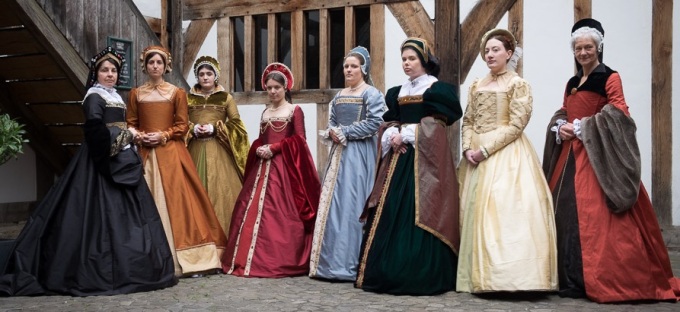
ncc flyerThink you are not interested? markterry_170509_8660cropThe latest group are putting their efforts on display this weekend and it is worth taking a look.
markterry_170509_8459crop
This is good old fashioned history based theatrical costume making.
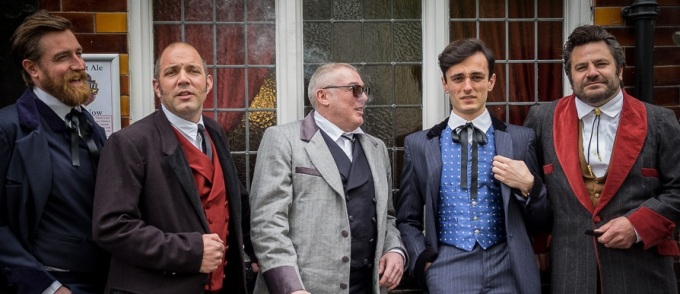
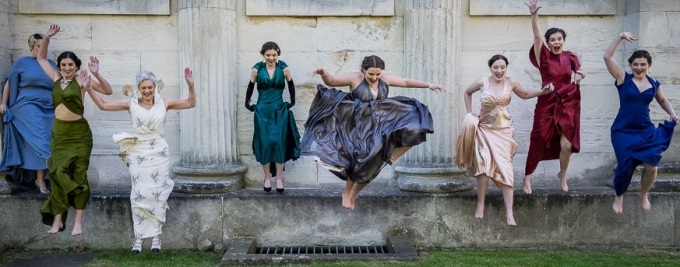
Never wondered how many component parts go into making one Tudor "dress"?  Well, now is the time to start wondering and also have the opportunity to find out.  At the same time you could take a peek inside  a Teddy Boy's pockets, or ask the ladies about their 1940/50s evening wear.
markterry_170509_8814crop
I went along as a dresser for the Tudor photoshoot in our local Tudor Barley Hall. Those big skirts over farthingales and the stays can take quite a lot  effort to get on and then to manage. It was so atmospheric in there - I can't wait to see the photos.
The Teddy Boys stayed in the city centre down one of the seediest side lanes. No romantic Tudor beams for them. The final shoot of the day was at a Neo Classical chapel. A rather busy day.
markterry_170509_8660
Take a look at the complexities of the makes, see what can be achieved with some  ingenuity, hard work  and a lot of know-how and guidance. And then think - this was all achieved in 15 weeks!
I did the course a few years ago, and survived with battered, stitched fingerends and a lot more skills than I started with.
If you are in York, do drop in.
markterry_170509_9194cropallPhotos : Mark Terry

Wednesday, 20 July 2016

update

I' m feeling guilty for not doing more on the costume side - I spent most of the Spring working on the full sized costumes for the York Mystery Plays and apart from this have had very little time to do anything other than my textile-arty-stuff.  One day .......


If you would to see more of this  try franbramm.wordpress.com, on facebook or google my website.

Sunday, 27 April 2014

Georgian Jacket, caraco, pet en l'air, bodice......

Georgian Jacket - the French Revolution  Dress crossed with the Chocolate Girl.

Somewhere along the way I  acquired a pack from the Northern Society of Costume and Textiles about a dress  displayed at Castle Howard in the 90s.  The linen dress had been worn ( as a disguise!) by the widow of the Comte Guillaume de Panthou, wife of Henry Seymour, to escape from Paris at the time of the Revolution. By that time it was second/third hand, owned by the wife of a Seine boatman, adapted and altered from earlier incarnations. Although fine linen, it was no longer an expensive or luxurious garment, the fabric dates probably from the 1720s and this was at least its third makeover.

It was the bodice that interested me, the short body, fitted back, and the sleeve. The pack contained a gridded pattern to enlarge and detail drawings with notes. This was to be a quick slap it together at Gwen scale to see if this was something I would want to make for myself.  An hour later it was done in the rough and I was making a smarter version for Gwen  as part of her anachronistic pillowcase-wardrobe-in-the-making ( see the Victorian bustle dress). Never can keep things simple.....

As this was a reworked dress for a working woman how fashionable would it have been? Would it have been up to the minute? Was the style exactly what was desired or, like me,  would compromises have been made?  The photo above was the only one I could find for the dress so went looking for other sources for ideas of the front and closer detail on the peplum.  Many do seem to have similar bodies but  vary in skirt, sleeves and neckline. These source images and others are on my pet en l'air pinterest board.
 In the Liotard pastel study, the Chocolate Girl, 1744/5,  the jacket is different in detail, winged cuffs, the longer peplum reads almost as coat tails, and it looks as if the front maybe gathered under the apron bib. What it does have is a flat front with the shoulders  set well back, all  of the in and out curves on the torso happen at the back.
 I decided to take elements from both with a little bit of help from others such as the yellow c1750s example from Christies. This was never meant to be a precise recreation or totally historically accurate so a bit of mix and match wouldn't hurt.


The idea really was to make a short jacket/bodice  with a flirty peplum. The  fabric of choice was another Hobbs pillowcase- nice crisp cotton with a bold blobbish design.  The plan was to unpick and use the short side for the bodice and the larger part for the skirt. The base pattern shapes are from the Revolution dress but unfortunately the peplum was a greedy thing so I ran out of fabric to do the 2 part long sleeves - the compromise was to 'borrow'  a shorter single shape from Janet Arnold.

This is now complete, flat lined and with a contrast binding to finish the cuff and hem ( only because of fabric shortage- couldn't make my own bias).  It behaved quite well, apart from the fraying fine calico as the lining, but it did take forever. The back and peplum are in 4 pieces, the front and shoulder in 2 as well, so lots of  seams and finishing. In trying to speed this up I tried a stitching the top and lining fabric at the same time - http://stay-ingalive.blogspot.co.uk/2011/03/how-to-do-weird-running-whip-stitch.html . This seems to be a form of ladder stitch now I look at it but I ended up producing a version  of this. I whipped the return stitch over the top instead of coming back through the fabrics but it does work effectively enough.  I, of course, didn't remember about this until most of it was done.  The compromise sleeves look quite at home, the tuck at the cuff to create the elbow bend was a nice touch. The peplum is a bit exuberant, flirty I wanted but this is very outgoing, very 'pet en l'air'.


This is the first part of the outfit. Of course it needs the skirt. I borrowed my pet en l'air's skirt for the photos but it will need to be  slightly longer at the back to compensate for a bigger bum roll. The Christie's side view has a very exaggerated  bum, the peplum sticks out  above the horizontal. I think a  little less would suit Gwen, but will have to balance the peplum.  I'm hoping this style will suit Gwen's body shape more than the white pelisse - already she looks to be  more slender, the change in angle at the waist flatters.

 By next week this should be done, and hopefully the illustrations to go with it.  (It is going to have to be a Liotard-ish - but what on the tray? Chocolate.... cake? Coffee and walnut? TV dinner?.....)  or maybe match the starker style of the Victorian bustle dress?


pattern source - NSCT pack 2.- A Dress of the Revolution- worn for escape- 1793.  http://www.nsct.org.uk/
Janet Arnold,  Patterns of Fashion 1, p 42 (sleeve)
Met Museum and V&A

Sunday, 30 March 2014

Regency shawl dress, Gwen shall go to the ball!

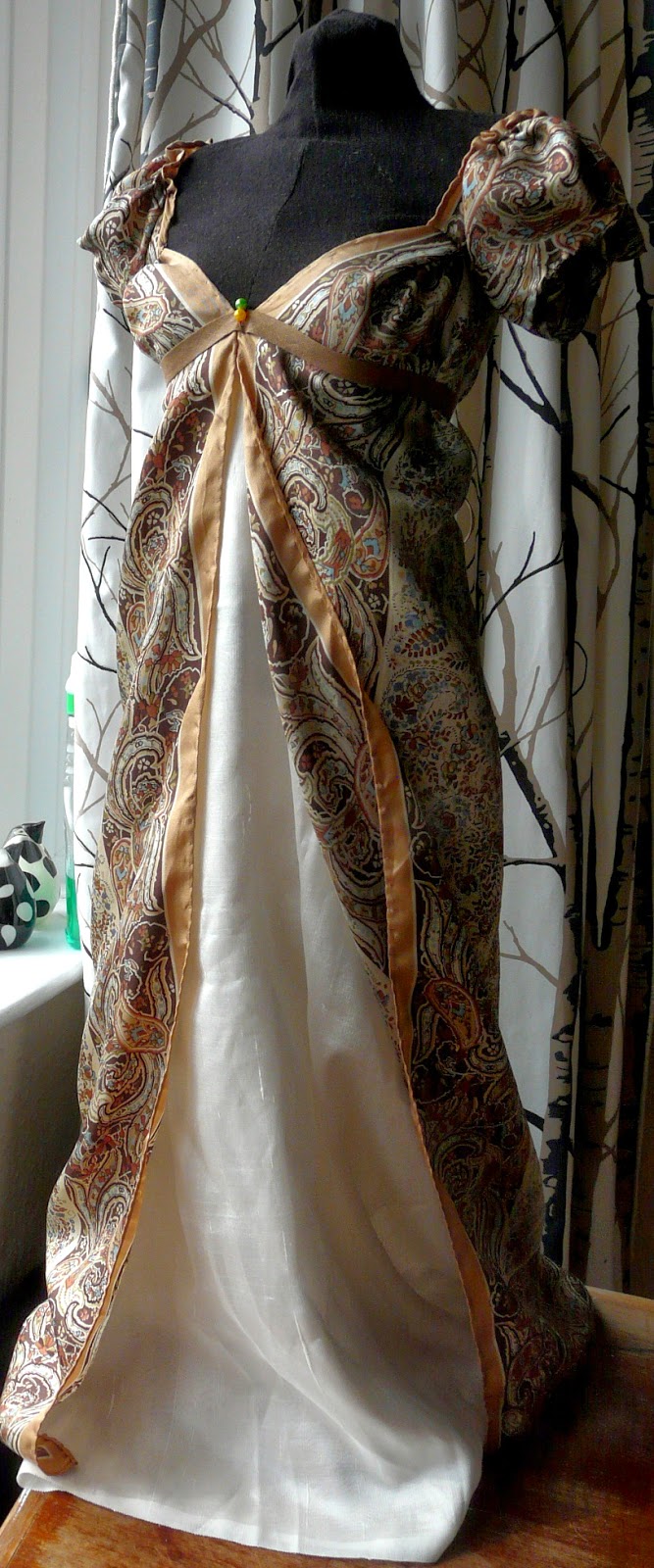
I claim no responsibility for this. A query was posted about using saris   to make a regency style ball gowns, they are a good source of fabric, richly decorated  and often excellent value. The responses cited the trend for dresses made out of the imported Kashmiri shawls in the early 1800s, something I'd known about but not really considered.
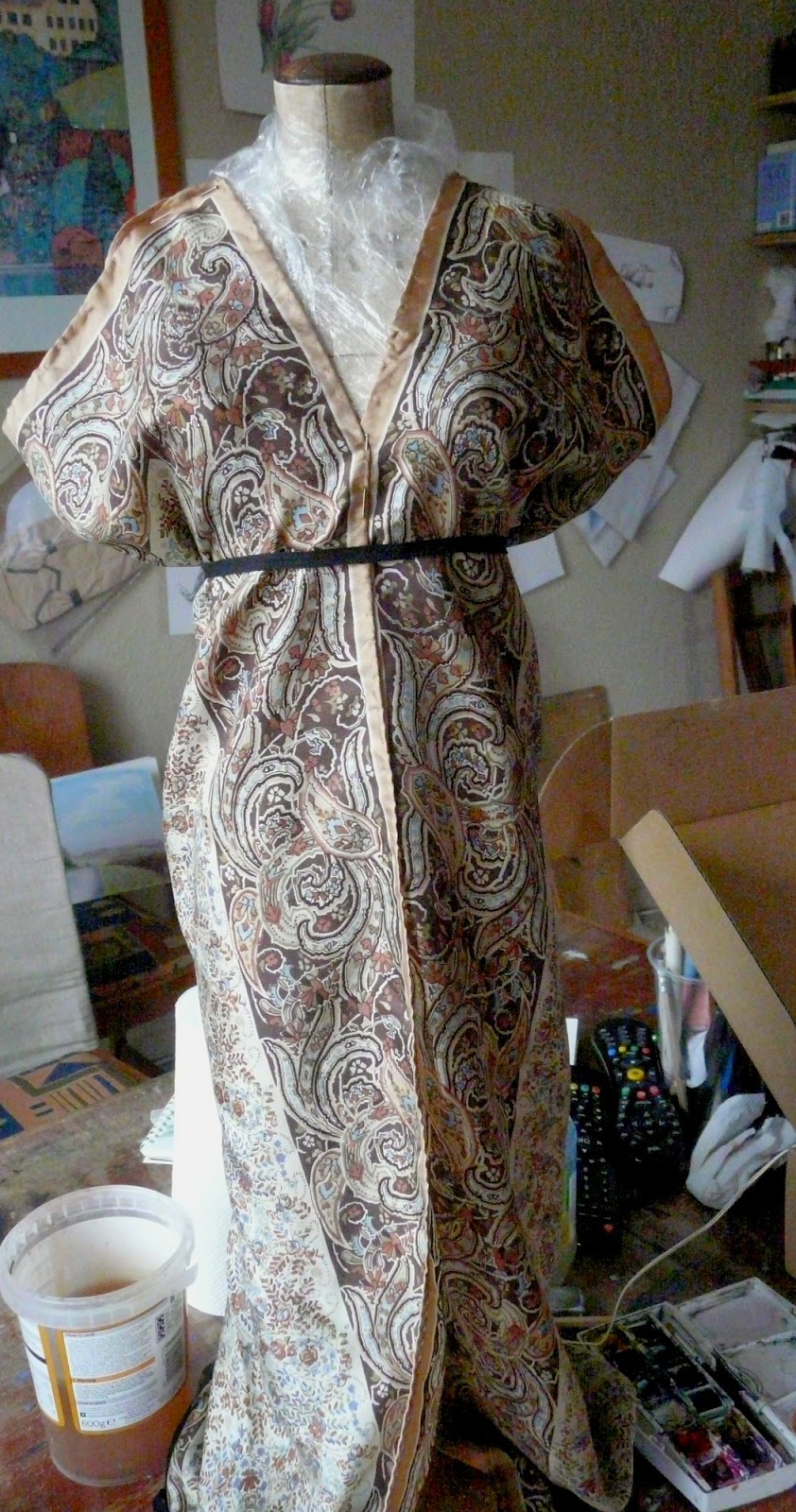
I just happened to be in a charity shop getting my breath back having cycled into town, it just happened to start raining so was reluctant to leave, there just happened to be a silk scarf of a sort of  Indian design, sort of the right size, so I bought it, and this happened......

Context first -  there are many pictorial and extant examples around, the shawls were huge so offered many options from the drapey Greek style chiton approach to using as a standard dress length of fabric.  The fabrics varied as well, from fine cotton and silks to heavier winter weight wool. The first blue dress was the one that began this little episode, from the Snowshill Wade collection dated 1815 and documented by Nancy Bradbury in "Costume in Detail". The second image is merely to show the volume of fabric and the ornate border of a shawl, the third is an 1810 dress from  Museo del Traje and  the blue print ensemble is  Empress Josephine's ( not entirely sure if this was made from shawl lengths or  fabric printed to look like it, one site is sure, another is not! but it has the same feel of using the imported pattern). They all make use of the borders and trims  especially around the hem and neck. The fashion plates show much the same  story but with more accessories, more ornament, layers of detail and pattern.
 
The original shawls were long rectangles with ornate ends but mine was a 30" silk-ish square with a printed border all the way round. A garment for me? No, remarkably draughty. A garment for the faithful Gwen. To the right the scarf is  folded into the centre and pinned at the shoulder to give a very basic drape. The challenge will be to stop it looking like a dressing gown. I like using the border  in the centre of an open dress but Gwen needs much more help and structure to give her shoulders, somewhere between the profiles of the  green and first red fashion plates.
 The dress is fairly simple, the only cutting was to take off the top border, This reduced the length and gave something to make the sleeves out of!
 
There are 2 rows of gathering to create the bodice, on the high waist line all the way round from border to border and at the centre back along the top edge. The front is joined at a point 3" down and the very top of the front border is pleated back onto itself to give the separation at the bodice.   Each sleeve is half of  the sacrificial top border, sewn into a tube for an inch and opened flat along the top of the dress and  attached. They are gathered at shoulder and cuff trying to give that extra breadth  across the top line. I did reserve some of the yellowy border to do the front trim but it has escaped at the moment, so a length of elderly bias binding is playing understudy for the photos. It gives better definition to the bust but is rather clumsy  tied at the back. If I can't find the renegade trim this is all I have left of the fabric to work with - wish me luck!
 
And the most important question of all - Does this make Gwen look less like Juno, athletic and wholesome, and more of a siren, has she achieved cleavage? 

Certainly like the wider shoulder, even if they had to have stuffing shoved (romantically) up the cover to stop the sleeve slipping off. The back is a bit too much, may be lose some gathering to the sides. For such a straight forward idea this has not ben easy. Getting one side to work was simple, getting the other to match was a pain. The fabric was lovely, to look at, but had no substance. It lost all shape and form unless it was on the model so that was how most of the sewing was done. If I was making this for real the seams would be taped and the bodice mounted onto a lining.  I must take a pattern from this and try with a more meaty fabric, with some adjustment this could become another Gwen wardrobe staple. At least it is her very first grown up ball gown. Not bad for £2.49  ( cheap date).

Some useful sites-  There are loads out there, but will there ever be enough time to read them all?
http://historicalclothinganduniforms.blogspot.co.uk/2012/03/not-only-shawlshawl-dresses-and-dresses.html
http://thedreamstress.com/2013/01/the-kashmiri-shawl-and-the-dress-made-of-kashmir-shawls/

http://www.fashion-era.com/regency_fashion.htm
http://www.marquise.de/en/index.html

Sunday, 10 November 2013

18th Century jacket - pet en l'air.


And this week's challenge – a pet en l'air (pet en l'eir?). I think the direct translation is somewhat rude but to me it is a sack back jacket from the 1700s, a kind of short version of an open robe, or robe a la Francaise.  Think Watteau, think Thos. Gainsborough. This was an informal garment, worn at home, so when finding portraits I've looked for full gowns showing the volume of fabric at the back and the fitting at the front.
Watteau studies - just how much fabric! Shall we play guess the weight?
Gainsborough - Viscountess Tracey


Gainsborough, Miss Theodosia Magill
 The one I am making is based on one from the Snowshill Manor collection dated 1745-55,  described and drawn by both Janet Arnold and Nancy Bradbury. It is made in silk with a linen lining and probably worn with a kerchief to fill in the neckline.

Drawing from Janet Arnold, Patterns of Fashion. The painting above is the one cited by Bradbury - Upton House NT.


  Again it is made to fit Gwendoline, the little model, so every inch on the pattern becomes a centimetre- there will have to be other tweaks and adjustments but the Arnold diagrams will provide the basic shapes.
 I am using a printed cotton - quite fine in texture, too much of a coward for silk or satin at this stage of the learning curve.
 There are several extant examples documented and similar jackets seem to have many different names - on some the front closes, others the stomacher is pinned in as a temporary closure, the back pleats can be sewn in or sewn in part rather than hanging from the neck line. This caraco is from the Met. and although the detail may be different it does give an idea of the garment and the size of padding needed to get Gwen up to speed! I do get everso confused by all these names - I think I understand what a caraco is, a casaquin, a pierrot , and then..... Never mind - the embroidery is exquisite and that row of buttons!


met museum. caraco. 
– Even with 2 sources to glean information from I had no idea how this garment worked. Unpicking happened often. And again Gwen's shape has caused some major headaches- she has a wide flat torso, little hips and a long smooth waist, nothing like the kind of corseted shape shown in the contemporary paintings. I have tried to be as faithful as I can to the original – give and take a bit (quite a big bit in places).  The pattern had to be extended  to fit around

her and the upper front elongated.  The fabric is in two halves – joined at the centre back , with a major amount of pleating on the hip and back and the front bodice extends over the shoulder to meet the back.. What did become obvious as I tried to put this together is the importance of the lining in creating the base for the top fabric to hang from. There is a lot of fabric there - Gwen is 16cm across the shoulders - one half of the top fabric is over 50cm.  Janet Arnold described the parts being made up as one as far as the centre back, so that is what I did, but the lining back has to fit snugly to give shape to the bodice front and shoulder as well as to support the pleats. So undo the flat lining and fit the back bodice together – re-attach top fabric so there was something to hang the pleats onto. Working without a centre front was also difficult - trying the garment on Gwen seemed to give a different fit each time, and with the top and lining together of course they behaved differently again. To stabilise it the false front was made up and fitted as shown. Chickened out of doing the tab fronts from the original jacket and treated it as a solid piece with hooks and eyes to fasten at centre front just to make fitting easier. Considering how the parts were made and all that had to be done was to sew it together neatly the length of time taken seems huge- 2 hours! The side seams were extended an inch to fit Gwen more snugly but then there should be hoops or at least a large bum pad to hold the skirts out from the body which will alter the shape completely - can't win!


Next steps – sleeves, ruffles, hem, decoration.

The arm holes seem to have migrated backward  but I left a lot of spare fabric when cutting out so should not be too difficult to re- establish. I am looking forward to the sleeve - it is such a different shape. The pleats at the head should give a little leeway but....
A the real reason for putting myself through this torture ? Want to make the ruffles, I want to flounce. Already thinking through and planning...... are they lined - self or linen? or hemmed ? Do-able at this scale? Hours of fun to moan about next post.

 
 I've put in some of the useful sources/blogs etc. To be honest there is a lot of very good stuff out there- these are only a tiny tip of the proverbial iceberg.
 http://brocadegoddess.wordpress.com/pet-en-lair/   does a much better job of making than I have!
 http://www.marquise.de/en/index.html
http://americanduchess.blogspot.co.uk/2010/10/costume-analytics-1770-80-chintz-caraco.html

and of course - Janet Arnold -Patterns of Fashion 1 p28-30, Nancy Bradbury - Costume in Detail p19 National Trust - Snowshill collection.
BBC paintings, Met Museum, and Museum of London.

Sunday, 13 October 2013


Fisher women of Yorkshire - a less gothic version of Whitby.


Stephen Friend has loaned  a costume to me, made for the "Women's Voices" project by York St John University. It was based on Frank Sutcliffe's photographs of the 'fisher folk' on the east coast around the 1890s. It is a jacket and skirt, worn over a bright red petticoat, with heavy boots and large shawl. It is  a practical outfit of drab striped fabric, rather like a soft cotton ticking. The jacket style is conservative, fitted with two darts each side and boned. It has centre front opening with 12 self covered buttons, high neck with a small simple folded stand collar and tapers to a v at the front and centre back hems. The shoulder seams are set a little back from the top of the shoulder and the back has curving seams from the armhole to the hem.  The sleeves are long, gathered onto  unstiffened, buttoned cuffs. The bodice is lined, except the sleeves, the boning inside  the lining under the lower buttons and darts, and mounted on top of the under arm seam and lower centre back line. These have a narrow cotton casing. The skirt is quite full, gathered onto a waistband with a flat centre front section. It is made in three parts, with a centre back seam, open at the top and closed with a mother of pearl button on the waistband, and a side seam under the bust dart.  There are several images showing woman wearing similar skirts, some with rows of pleating or deep frills around the hem, most with large aprons, often large shawls, and in various states of repair. The skirts seem to be relatively short, well clear of the ground showing the stout leather boots, a far cry from the delicate Regency styles I've been making recently (can't image these ladies being held up as aspirational fashionistas in a ladies' periodical). From the look of some in the photographs clothes were worn until worn out, remade and worn again.(take a look at the photo of Polly/Fanny (ref 24-29 in the Sutcliffe gallery) and see the repaired and tattered state of her under layers)


I'm using this as a practice exercise for working from an extant garment. A page of notes, diagrams and images was first, looking for seams, pattern shapes and construction details. These should have been done to scale but ... but at least I did pay attention to proportion and placement, spent longest on colour matching! I saw this as a 'getting to know you' phase. The seam lines and darts were transferred onto long suffering Gwendoline and then pattern pieces made to fit. Trying to find a suitable fabric was not a happy morning, could have made it in plenty of Halloween spiders or Christmas holly sprigs but a simple stripe? Ticking seems to be endangered species, so much is quilting or crafting cotton and I object to insanely cavorting teddy bears in waistcoats. I did find one that was suitable-ish, but it was a delightful lightweight wool herringbone at £36 per yard – oops.

I have used a compromise fabric from the stash – a blue cotton pinstripe, a roll end of shirting, not beautiful, a lighter weight and not as dense, but at least I'll be happy re-cutting pieces if/when I go wrong.

The pieces are cut and ready to assemble, and there it stopped – streaming head cold has claimed another victim. I tried to continue making but having put the dart seam allowance to the outside three times in a row- quite a feat in itself – I am giving up until the head clears and the eyeballs fit their sockets again.

I hate colds.

I really hate colds.


I have tried to paint from Sutcliffe's photographs inbetween sneezes but with little success. I like the concentration on the seated figure but the standing figure is one that I guess was used as inspiration for the costume, so I've altered some details to match the made skirt. A lot of the images show the women knitting, she is meant to be holding a skein of wool for the other to wind or work. Unfortunately in my version she seems to be having an out of body experience!  I haven't found a late Victorian portrait genre that I find inspirationally different from the earlier styles. That is this afternoon's job, BBCpaintings and Wikipaintings be warned, as long as I can stay awake.


Hopefully by next week the self pity will have passed, the cold will be vanquished. Doing 1890s clothing means that machine sewing is the way to go, so this garment should be quicker than the previous ones apart from the fact that I'm trying to match inside and out. The jacket should be in the process of finishing and the skirt blocked out ready to work by the time I post again.


Many happy sneezes of the day.....

Friday, 13 September 2013


Gwendoline's party frock.


I'd been given some pretty offcuts a while ago so decided it was party frock time. The fabric was quite stiff, frayed happily, and has trailing flowers embroidery which can be awkward in the seams. But that is the up side. The embroidery is not really period at all but did remind me of an example from Worthing using fine embroidered Indian muslin.

Worthing. 1810-20s.
The fabric is in long narrow strips and doesn't have the drape and hang of the muslin, so I went looking for styles from 1815 onward rather than the more pure NeoClassical look of the early 1800s.


 I hoped to make a  high waisted dress with a panel of pleated gathers on the bodice front, fastening at the back, with a gored skirt. The neck was to be embellished and the sleeves short and open to reveal an undersleeve in contrast material. The hem would be decorated and possibly stuffed to give the 1820s rounded shape to the skirt. Both of the plates below show  the wider flared skirt, the fitted bodice and lot of decorative detail. The necklines are wide rather than very low, both accent the waist with a ribband.  extant dress is from the Met collection, the padded hem is clear and holds the skirt out from the feet. Perhaps the mockery of the satirists had had its effect - take a look at the 3 Graces in a high wind by Gilray!


Problems – fabric. It has a nice sheen but resents being folded tightly, the bodice front is rigid! Top sewing on the neck did help but it tends to do its own thing given half a chance. The same problem with the sleeves, rolling the edges to create neat mini hems was not happening so I ended up facing them and they stood out rigidly like bat wings instead of falling gracefully . Research to the rescue! 1820s seemed to delight in layers and contrasts of textures and concepts. The tight bodice with the massive exaggeration of the sleeve, the simple dress with great embellishments at neck, arm and hem. The purity of the Neo Classical hadn't lasted long. In the Janet Arnold are several examples of pleating, gathering, slashing or opening to reveal an under layer, Renaissance influenced, and of mixing fabric surfaces, tucks, cording, using lace.   The 1827 Snowshill and Gloucester examples have so many ideas!
 I had already started on crocheting a heavy lace edging for the neck, close to the dress colour but the satin sleeve lining and waistband are toothpaste white. I made a butterfly in the crochet lace to hold the sleeve together over the lining to defeat the bat wing look but was doubtful about  white and cream together, but it does seem to work,
 This left decisions about the hem. Made the decision to try out the Gloucester Museum wedding dress decoration in scrap fabric and to a larger scale. Thank goodness I did! This just eats up fabric. The top piece is on the cross and uses double the width, I don't have any where near enough fabric to do this for the dress! The top and bottom are bound in satin on the original, I just used some left over cotton bias binding- again far more than it looks, all those vandykes are a trial. And the time!
 Looking at the pattern it appears simple but this doesn't work, to get those rounded gathers they have to roll under and then emerge flat to link to the next repeat. I have got close to the original but am not yet happy- do think it looks a bit like a curtain pelmet.  While I would like to try this for real, but not with this embroidered fabric.  It is just not flexible enough for anything like these so the compromise queen swung into action again, I tried the stuffed rouleau hem to see how this does affect the shape and hang, added some extra texture with a larger version of the neck embellishment. The compromise does not look out of place but is a bit plain, perhaps another crocheted row or two would do. The hem maybe over stuffed, the wadding makes the hem stand out stiffly and always wants to make circle. As the skirts got wider it must have been like a bumper car convention. The technique  is simple enough but is unforgiving, the hem has to be absolutely level and hang symmetrically before starting.
 Review-  too safe. Enjoyed the experimenting but as soon as it becomes a garment it goes tame. This began as the same pattern as Gwen's poplin dress, it seems to be a decent base so I could afford to be more adventurous.  Perhaps time spent doing experiments rather than garments could be wise. Extend the range and then try to apply it?
 Next challenge- a printed day dress. The fabric is soft but dark, so pleats, tucks, flounces, contrasts. I've been roaming museum sites, blogs and pinterest, so goodness only knows what is going to happen! Perhaps if |I put the Janet Arnold books under the bed I shall awake infused with that knowledge, experience and know how!