Showing posts with label dress making. Show all posts

Thursday, 11 May 2017

Northern College of Costume Exhibition

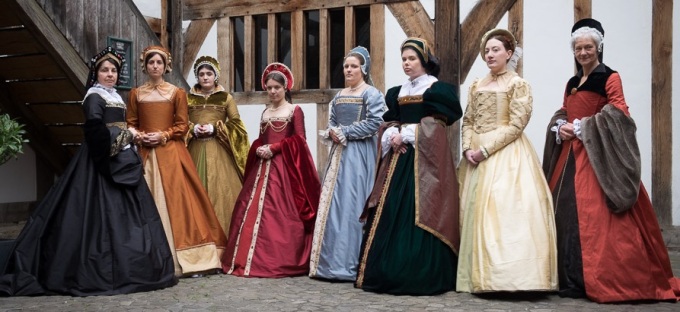
ncc flyerThink you are not interested? markterry_170509_8660cropThe latest group are putting their efforts on display this weekend and it is worth taking a look.
markterry_170509_8459crop
This is good old fashioned history based theatrical costume making.
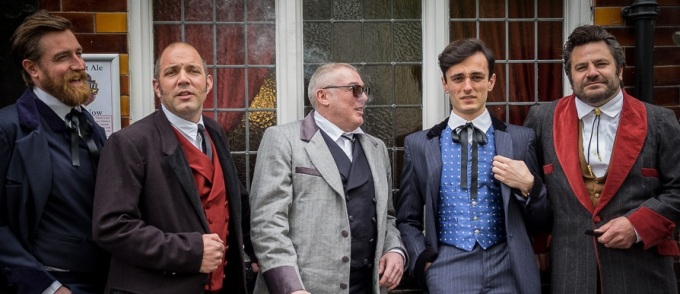
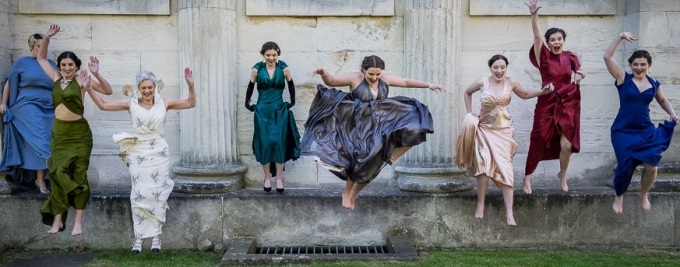
Never wondered how many component parts go into making one Tudor "dress"?  Well, now is the time to start wondering and also have the opportunity to find out.  At the same time you could take a peek inside  a Teddy Boy's pockets, or ask the ladies about their 1940/50s evening wear.
markterry_170509_8814crop
I went along as a dresser for the Tudor photoshoot in our local Tudor Barley Hall. Those big skirts over farthingales and the stays can take quite a lot  effort to get on and then to manage. It was so atmospheric in there - I can't wait to see the photos.
The Teddy Boys stayed in the city centre down one of the seediest side lanes. No romantic Tudor beams for them. The final shoot of the day was at a Neo Classical chapel. A rather busy day.
markterry_170509_8660
Take a look at the complexities of the makes, see what can be achieved with some  ingenuity, hard work  and a lot of know-how and guidance. And then think - this was all achieved in 15 weeks!
I did the course a few years ago, and survived with battered, stitched fingerends and a lot more skills than I started with.
If you are in York, do drop in.
markterry_170509_9194cropallPhotos : Mark Terry

Sunday, 7 September 2014

Gwen's bustle dress finale

Gwen is far less demanding than I am - she is putting up with a lot - and at least she hasn't changed size and shape during an extended make. My own bustle out fit is progressing in fits and starts but is getting towards its final form and details are being resolved - let me get the sleeves on and I'll tell you all about it.

Gwen, lacking arms, isn't too hard to set sleeves for, so hers is about complete now. Some areas may be changed but the garment is together, the lining is in, so we did the photo shoot to show the final dress.

Completed to date - cage, petticoat, foundation skirt, apron and bustle. This week's task was the bodice.  The idea was to combine the two fabrics used to bring the ensemble into a cohesive whole. Yep - cohesive.

The pattern used was an adaptation of one used for the fishergirl project - simple pieces, straightforward construction, clean lines and unfussy. The front was one piece with 2 darts each side, overlapping centre front for button fastening, centre back seam and side back panels, 2 part sleeves and cuff.  t\he plan was to used the pattern fabric for the side back, cuff and facings, but of course this changed. The front looked too plain so patterned revers appeared, the patterned stuff did not like tight corners so a satin lining appeared ( off cuts from my own bustle project).  Also a flirty tail was added to sit on top of the bustle- not quite sure whether this has worked or not.  The sleeves as you can see are a high tech re draft giving less curve on the sleeve top and elbow. The only part not shown are the flirty bits, semi circles, added onto the back and side back pieces.


last week
this week
This was Gwen last week -  wearing the underwear, foundation skirt, apron and bustle. The apron has become more gathered and a little higher - late night decision!   The bodice is to complete the outfit,  not dominate it. Pressure is well and truly on at the costume college so this has to be quick.  So selecting the pattern pieces was Saturday at about 3pm. completing was 11pm.   The fit is not as exact as I want - extra side seams my appear,  to tighten up the back and the forgotten collar should arrive at some point - totally, totally forgot.  I like the 3/4 view- it shows the simplicity of the shaping and lets the contrast in the fabrics speak for itself.  There is the usual lack of mini buttons- the ones I liked were 48p each -  more than I paid for the fabric - dream on.


As for mine - it has got this far - bit of a hiatus at the start of the week - lost so much weight that my corset is too big - so borrowing one that is a different period and shape - so had to put toile back together to check fitting was do-able. Of course all the pieces were already cut so it was fairly fraught. It did work so then tacked together the real pieces to check - some changes to the side panels later and it was ready to work..... Phew!

one morning tea usage!

Distractions - pizza for one of the late nights.
 Forgetting about an art exhibition and having to rush about to get stuff together - thanks, Steve.
  Chain came off bike 3 times - have figured out how to put back on with out oily fingers.
 Chased by a cat.
Washing machine is working!
The Tde F crochet bike I helped with is on display at Naburn!
Made apple chutney so house is rather - fragrant.
 Can not believe the course ends on the 27th. With an exhibition.  Which means no excuses- all has to be finished. Best get on.....


Sunday, 8 June 2014

chemise a la Reine - Gwen style.


This week's effort was meant to be light relief – I think you can guess what happened.
I picked an iconic garment from the 1780s; the chemise a la Reine. You probably know the dress even if the name is unfamiliar – think English country house portraits with white fluffy dresses, frothy at the neck with big coloured sashes and ribbons. The setting may be countryside, the lighting dramatic. Big picture hats, and occasional dogs or children.

This had begun life as a  'gaulle'  (robe a la gaule), a loosely fitted  dress of layers of muslin usually worn with fichu and apron. It was picked up as an informal relaxed style by Marie Antoinette and popularised by her, she even sent examples to the Duchess of Devonshire and Mary Robinson in England. It became known as a chemise a la Reine,  an insult - the Queen's underwear. This did not stop the dress becoming popular wear at  Petit Trianon and amongst the fashionable classes. The queen was criticised for  this - it was not suitable or appropriate for one of her status. Even the fabric was seen as unpatriotic,  the expensive cotton muslin had to be imported at a time when the home grown silk industry was in decline.

The basic idea of the dress is very simple- think sundress with sleeves. It is a large tube gathered at waist, neck and sometimes inbetween, to fit.  It has shoulder straps  and sleeves which are gathered at various places. Some have flouncy necklines, some lace, while others are left plain. Lots of ribbons and large sash complete the look. For 'simple' garments some examples are extravagant and flamboyant  expressions of wealth

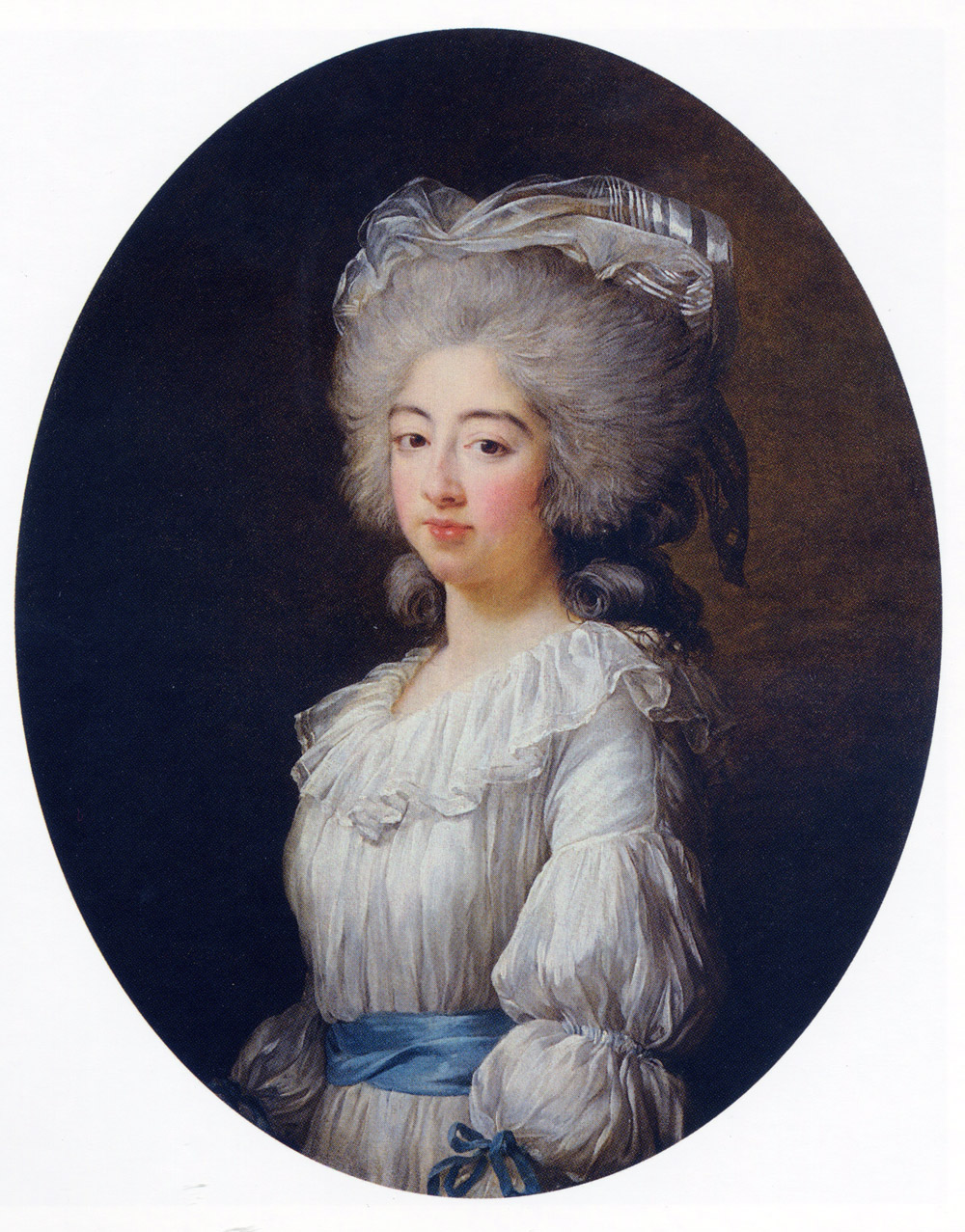
There were many examples to select from,  Vigee LeBrun painted many of the grand ladies in the dress, remember the infamous one of  Marie Antoinette?, but this is the one  that appealed the most. –   a rather detached looking French lady and I liked the sleeve details. 

This portrait is of  the Countess of Provence, Maria Giuseppina of Savoy (known as Marie Joséphine in France)  dated 1782. ( Wikipedia is not flattering but in outline - she married  Louis Stanislas- younger brother to Louis XVI. They  escaped the violence in France and established a court in exile,  and following the death of the Dauphin her husband was declared King Louis the XVIII, she died in Buckinghamshire in 1810!).

There are many blog sites describing the making of the chemise but the only pattern guide I have found is a diagram from Norah Waugh. Unable to print it out, I measured off the screen, (umm) and drew up a rough outline of the main parts with 'hopeful' if not aspirational measurements.
 Norah Waugh's has 3 rows of gathering, the top neck edge and the 2 channels marked, Marie Josephine  only has 2 rows on the body, the top of the sleeve has a tighter band (can not make out how this is done), and a lace collar. Could not see the bottom of the sleeves so  prepared to make this up - as if the rest was incredibly accurate!

This an approximation of Waugh's outlines - I was able to cut the whole body out a single piece so the only seam is centre front. The circumference  of the tube is 1.26m to fit a bust size of 43cm! The sleeve looks huge -  45cm wide and the top of the sleeve is flat, the cuff is curved, which feels odd. So far it looks easy, and quick. Time to get real - fell seams ( I did French) = 2 rows of stitching, rolled hems on every raw edge, each gather needs a casing = 2 rows of stitching, and it all adds up.

The muslin I had is a gentle yellow tone rather than white, quite nice quality, evenly woven without slubs or snags. Meant it looked nice as it unravelled.

Making up -
The back neck edge is gathered onto a fixed band of cotton
tape to give some stability. The front neck edge is folded to give the dip to the centre front and used as a channel for the first drawstrings- these run from the armhole forward, I made eyelets so that the ribbon 'strings' could come out to the front to be tied. The waist channel (5 mm cotton tape) was marked and  stitched to the inside and the front seam closed upto Gwen's waist level. The remainder of the front opening was hemmed and folded under.

This was the body of the dress done.  Next was the shoulder pieces, These were adapted to fit Gwen but the rounded 'serifs' top and bottom were kept - these gave a rounded transition from shoulder to front and back neck.


 In the first image the sleeve is pinned in situ to get an idea of the space the strap has to fill, In the second the strap is drawn onto fabric and problem one is found - should the front be gathered right to the armhole or just to the edge of the shoulder piece? Opted for the second in the interests of reducing bulk. The bottom photo shows the sleeve coming up from below and attached to the strap lining piece. to the right is the front - seam done and the allowance folded upwards. The top part of the strap is already attached ( along blue line) and waiting to be flipped over to be edge stitched down onto  the same seam line as the lining. This encloses all the nasty raw edges. Sounds like a headache? Not really, just takes some planning, fiddling and patience. The result works well, no raw edges inside or out to worry about.
  Have you noticed problem 2? Forgot to reduce the top of the sleeve. Lesson - big, BIG stitches preferably in neon colours if ever you want to unpick on muslin. Having done some damage attempting to unpick the sleeve  an executive decision was made - live with it, reduce the top sleeve width by other methods.
Sulking gently it was neck line time - and no lace to suit! The modern stuff was toothpaste white or just not long enough so.....
Introducing extant example from Manchester -take a look at this site for fantastic firsthand details and images, This had a flouncy double frill at the neck,  so cut on a curve rather than a straight  gathered strip. This gobbles up huge amounts of fabric and is a pig and a half to hem. Nevermind. Bit of grit and a packet of biscuits ( plain and not greasy) and it was done. Done and then some - it is too much. And it is a nightdress. Hum. Not quite so bad with the waist drawn in but still..... problem 3.

Solution time.
Problem one sorted en route - only gathered the front neck edge on strings.
Problem 2 - needing to draw in the fullness at the top of the sleeve - smocking to the rescue. Did 2 rows of simple square smocking at the top of the arm ( mark a square and pull the opposite corners into the centre and secure. You get a four petalled flower on the stitch side and a square puff on the other. Just repeat.)  Probably should have done 3 or 4 rows for a denser effect but they can be added at will.

Problem 3 - uber frilliness. The fault lay in fully opening the neck gather and stitching the frill along its length - 25cm worth.  Solution was logical, less gathering . So unpicked the front,then gathered half of the neck edge and secured it.  Re attached the frill taking  11cm  off its length each side, neaten, and rejoice. The reduction in the amount of fabric in the frill  has helped a lot.

All it needs is sleeve gathering channels - surface mounted  muslin strips this time. I did experiment with more gathering rows but it became too congested - There is also the option of adding lace frills if it feels unfinished.
Washing time to get rid of the blue marker and then photoshoot!   Done. (not done - see the following posts!)
Odd thoughts - in the photos it looks Edwardian.But so did the Manchester one. I think the proportions may be out - more hip and less bust required?  The frill is too wide  -compare to the portrait- volunteering to re-hem all of that on the bias? - next lifetime may be. Meantime out with the bum rolls. Could possibly just roll the hem again? NO.
 Time for tea.
 But maybe the length of lace I just found could do the neck line better........ These are just details  the dress itself has worked well. There maybe an occasion to try the third row of gathering on the bust line in the future -  but it is huge - the volume is immense - 3 or 4 lengths of fabric for full size! No wonder they were considered as frivolous expensive things.....

Stray thought -Just trawling through images with no idea of the stories and history behind the people shown, so do tend to see them just as pictures – more likely to assess painting style and dress than anything else. By finding out more about the sitters, these are now dresses worn by people- not sterile museum exhibits. I started feeling uncomfortable about seeing them entirely as artefacts particularly as so many came to violent ends- what they wore only a few years before became less important. It is a little relief that this lady survived the Terror- imagine if I'd picked the next portrait along - Princesse de Lamballe - Marie Josephine's sister.
Sunday, 6 April 2014

Regency summer dress with smocking details.

This week's task
- not so much working on a basic shape but looking at how to modify and extend this to create detail. Instead of straight gathering  I decided to make the gather decorative and an integral part of the overall garment design. This is the start of Gwendoline's summer wardrobe. Rather Georgette Heyer, fresh, bright, innocent.
Met Museum Spencer
Pelisse, 1815-20
Smocking has a long history, it is a way of using pleating to alter shape,  of drawing areas in and allowing fullness in others without fancy cutting. It has become decorative, patterns sewn onto the pleats, or  creating patterns by how the pleats are formed. When looking for ideas I  went for the latter technique, the former is something I associate with either Farmer Giles or small children.


 The associations with the second technique are no more promising - silk fancy cushions -  but  it did look more like some of the details of some regency clothing. The technique is simple. Mark a grid on the fabric and sew points together to make pleats. Most things sound simple in such basic terms! It did require precision, neatness and patience, not my natural skill base.                                   .
 
To keep life simple - gingham! The smocking grid comes ready made with  this fabric. Gingham was around and used in the period but sometimes as a stripe rather than a check. 

"My mother told me that my childhood had passed away; I was now seventeen, and must for the future be dressed suitably to the class of lady into which I had passed. ...
Two or three gingham dresses of different colours very neatly made with frills, tucks, flounces etc. Two or three cambrick muslins in the same style with embroidery upon them, and one pale lilac silk, pattern a very small check, to be worn on very grand occasions......”. (1814)   
from ‘Memoirs of a Highland Lady’ by Elizabeth Grant of Rothiemurchus.
 
So to begin...
It was going to be a bib front dress with a trained skirt but the fabric just wouldn't drape, the skirt was clumsy and gaped, so it was converted into a basic open robe with diamond back, high waist, straight skirt gathered at the back and overlapping front. But I also needed to know how much extra to include for the smocking, so experiment time....
the pieces

The purple sample is an interlocking leaf kind of pattern, made of 3 double rows of diagonal gathers. It seemed quite straightforward. The little squares pattern  is formed by pulling in 4 corners to a centre, this seemed more complex, first impressions are definitely misleading.
Areas to smock - sleeves, centre back, possibly the top of the skirt gathers at the back.  The back  gathers are large and left  a real question about how to deal with the fullness in such a small  area. The cuff edges are held by bias binding and the fullness above is pleated into the top of the sleeve  seam. This worked so well that I got carried away. Must remember that good ideas should be handled with care. The gingham is not really that nice, it looked so flat that a bit of detail on the skirt seemed the way to go. Could the technique be used to create interest and texture rather than gathering? Probably, but not by me! It began with the same pattern as on the sleeve but in miniature down the skirt front edges. This is a simple pattern but all of a sudden I couldn't understand it, which way should the diagonals go? How do they line up with each other? It also gathered up quite alarmingly, but looked great when rolled to make the edge. Phase 2 was the little squares,  2 side by side with a space above and below to make a column. So easy! This has  pulled up the hem but this could be pressed out  to a great extent. 
The dress was done, only the usual problems about buttons, I tried some covered discs but the fabric frayed too much at this scale so emergency beads are in place until I find something.  So of course I made an underdress out of the scraps, as you do.  The things I find to do when there is housework waiting and the lawn to mow..... I had intended a white slip, but the gingham fabric needed using up....


The positive - the sleeves. They have a sense of self importance and are more than prepared to stand up for themselves. It was surprisingly easy to work and they went in first time. I would imagine they would not be easy to wear, acting like shoulder pads, rising up to attack whenever the arm is raised too high. The gathering does work well visually, but caution is needed. For some areas a separate panel  might be answer. If I had sectioned the back into 3 it might have sat flat. against the torso. 
Negative - distortion. The front will need to be blocked to flatten it out a bit more. This will happen after the wash it needs and re buttoning. The self covered button idea looked charming  but was impossible, they needed recovering every time they were used. I must find  a decent solution to this as the beads are too small, the dress looks cross-eyed.
 
Would I make this full scale? Yes, but with modifications, and not in yellow gingham!
 
 And then the fun bit - creating a fashion plate-  The pose is from an 1824 Ackermann's Repository ball dress. The lady was eating an ice but  this has changed into sewing.
oh, and of course....
The Hider of Scissors. My own personal sewing demon, mischievous not really evil. 


Monday, 24 March 2014

making the mob cap

Georgian/Regency cap

Apologies for the tardiness this week - just trying to get the world to behave a little!  Failed. Gave up and am just getting  on with things regardless. And moan. And moan. Comfort eat. And made this as a by-product.

This week has been a very 'shut up and get on with it' one. I've had a chemise pattern for a while and was determined to make it. This is bread and butter sewing not cake, lots of straight, precise fell seams on a garment that was never intended to fit. As one who does not convey ideals of elegance and svelte willowy form, for me this garment had all the charm of a potato sack.
Being a good little beastie I even measured carefully and followed the instructions. Hah. Should have an ease of 12" over the hip not 20".  "This is a good time to finish your seams, if you have not already done so. The original has been entirely finished with small flat felled seams." And that is that covered. I have never tried felling intricate  'Y' junctions before, don't really fancy doing them again, not without more advice or medication. The great white whale is done, it will do until I've got my mental breath back and can face redoing the  dodgy bits. You may guess that I am not truly happy with it.
This left me with an aftermath of a floor, Furniture all over to maximise the floor space for cutting out, bits and remnants taking up residence, notions escaping, and sniggering in the corner is the machine and iron. So what to do? Bright idea, I'll make a cap out of the left over fabric, that will really help to clear things away!
So....
I've made the panto version (dustbin lid, elastic and ribbon- 10 minute task once started!) but this was to be a more refined form and the whole purpose was to make an exploratory piece to sort out shapes, sizes, design and construction  for future reference. As an adventure into The World of Caps this was a sewing machine job for speed with hand finishing if it came out right


The basic model - a version of a mob cap, frill as a peak, band and then the cap. Very simple, lots of variations. Standard indoor wear for wealthy widows down to the servant help, fashionable as well as utility. (The very funny ones are those perched high on top of the towering wigs, still with a pretty bow) So many examples are on pinterest  that I spent far too many an hour longing,  looking and worrying.
liotard -
Begin with identity crisis, what is my social status? To decorate, to froth with lace and ribbon or to be sober and plainer, cheaper. Seeing as the chemise fabric was the cheapest cotton I could find I think the cap certainly won't be of the posh variety.

Scale - I am not good with hats so something to hide/lurk in or that could be welded in place is a must. Of course at some periods caps were worn under a bonnet or hat, so this could be phase one of head wear.
 

Up to this point I was fine. Some fabric had left the floor, so had most of the pins, one pair of scissors and a tape measure.  Rough pieces were cut - long 3" strip for the ruffle, a band tapering at each end to over the head and a tall semicircle for the back. Simple and straight forward.

 Then..... Couldn't decide between narrow knife pleats or broader box pleats, so made one of each. Liked them together- why not use both?  The frills were sewn to the front edge of the band and tried on.  The moment photographed is the one of Hope Triumphing  Over Experience. The  pleats are full width 4" and seem to give an exaggerated ruffle, too much like a cake paper.  That I also looked like Mrs Tiggy-Winkle  crossed with Toad escaping as a washerwoman rather than a simpering Regency Miss, did cause concern. The pleats were reduced and layered as shown but I did  it the wrong way round! Redid with the box pleats wider than the other. These are forgiving and fairly open so with any luck the tighter knifed layer should stop it from flopping too much.. There are many paintings and extant garments to show that this double frill was acceptable but usually with the narrower band uppermost. By the time I'd finished these strips had lost that lovely crisp whiteness of fresh cotton, they are scarred, mangled, abused but still trying.


The  cap back was a horse shoe/ tall half circle, the bottom section folds up to make a drawstring channel. Not sure of the size needed I started off with 17" diameter and prepared to reduce. It was gather-stitched and pinned onto the back edge of the band and adjusted. When I thought it was fine I sewed the seam really,  really carefully but....
the back cap was still too full- positively bouffant, probably fine for the 1790s, but not a look I am comfortable with, so this was removed and made narrower. (By 'removed and' I mean unpicking seams, unpicking gathers, pressing, measuring and marking, 2 lines of gather stitch. pinning at the quarter and eighth marks, gathering to fit, sewing a new seam, removing pins and then pressing the seam open. Again.)

Major construction is done. I went with a band sandwich, duplicate band pieces top and bottom, holding all the seam allowances safe and out of sight. This was hand sewn - it felt so good just slipstitching along, and now the creation is created!


It isn't shaming but there are things I would change - the back is too long and could be gathered up more. Perhaps the outer frill is too wide still?  The knife pleats are  vicious, too rigid against the outer layer so they don't complement each other as I hoped. A run through the wash could work wonders as the fabric isn't pre-shrunk! 
As a cap it will do. I have a better idea of the process and adjustments. Worrying thing - still some fabric on the floor, would still be enough to make a cap........ and I do like the sans-frill carcase picture above. (Millicent could sell anything).  Remembering   "The Mirror of the Graces" advise I should be careful not to over embellish as a lady in the advanced seasons of life!

And, no, at this time I am not going to publish photos of me wearing it, content your little souls  with Millicent the Milliner's Dummy posing serenely for you. If you don't think I suffer enough do take into consideration that I have to tidy and resurrect the room for the art class tomorrow!
  I hate housework. Might find the other pair of scissors.