Showing posts with label York. Show all posts

Thursday, 11 May 2017

Northern College of Costume Exhibition

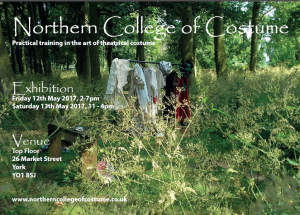
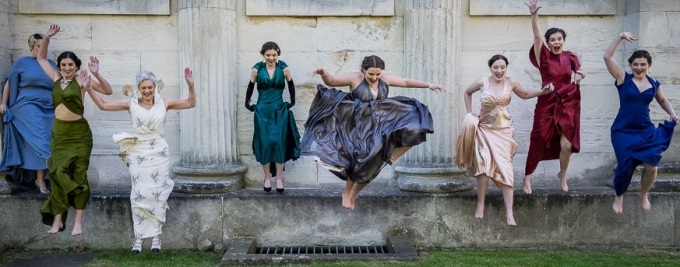
ncc flyerThink you are not interested? markterry_170509_8660cropThe latest group are putting their efforts on display this weekend and it is worth taking a look.
markterry_170509_8459crop
This is good old fashioned history based theatrical costume making.
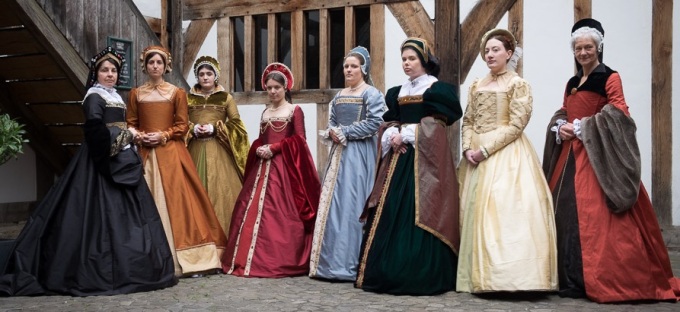
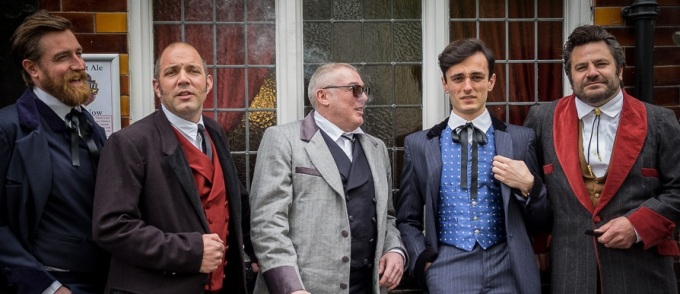
Never wondered how many component parts go into making one Tudor "dress"?  Well, now is the time to start wondering and also have the opportunity to find out.  At the same time you could take a peek inside  a Teddy Boy's pockets, or ask the ladies about their 1940/50s evening wear.
markterry_170509_8814crop
I went along as a dresser for the Tudor photoshoot in our local Tudor Barley Hall. Those big skirts over farthingales and the stays can take quite a lot  effort to get on and then to manage. It was so atmospheric in there - I can't wait to see the photos.
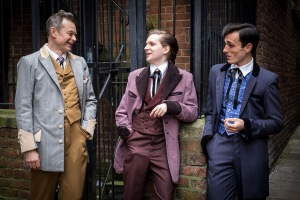
The Teddy Boys stayed in the city centre down one of the seediest side lanes. No romantic Tudor beams for them. The final shoot of the day was at a Neo Classical chapel. A rather busy day.
markterry_170509_8660
Take a look at the complexities of the makes, see what can be achieved with some  ingenuity, hard work  and a lot of know-how and guidance. And then think - this was all achieved in 15 weeks!
I did the course a few years ago, and survived with battered, stitched fingerends and a lot more skills than I started with.
If you are in York, do drop in.
markterry_170509_9194cropallPhotos : Mark Terry

Monday, 6 February 2017

A Tangent- but still costume and history based!

I spent part of the Autumn exploring the idea of clothing and words being linked at very particular times. This developed in response to my father's illness and the desire to wrap him the words he couldn't hear us say, to tuck them into the creases, seams and pockets of his pyjamas for him to find and hang onto as he woke up.
This became a textile installation  currently on exhibition in York, but also lead to other ideas.

What would result from combining primary sources with appropriate costume ?  One way to find out.


 Finding documents written by the mill workers proved difficult so contemporary  documents arising from their lives - a newspaper report and official factory accident report had to do as start points for the experiment.


National Archives is a great place to get lost in, virtually and really, but the first find was a newspaper report following an inquest  in Bristol 1860 on Elizabeth Davis, a 16 year old textile mill worker. She been injured at work and later died.

 The mill and the area was quite well documented with photographs from the era, so these were the start point for a simple work dress loosely based on a quarter scale version of a day dress in Janet Arnold's Patterns of Fashion. The account of the accident was embroidered across the bodice and around the skirt.


Martha Appleton was the small dress, 18cm high, and around the hem are quotations from her accident report. She had been injured at work, losing fingers on her left hand.


Made of cotton lawn to keep them delicate and light,  they were dipped in glue to set it into 3 dimensions. Martha was dip dyed but Elizabeth has been rubbed with graphite powder to age  them.

I still haven't made my mind up about them. There are things I would change, scale, the lettering, complexity of the make, but they are also in the exhibition along with extracts from the documentation. The initial responses have been very positive, even emotional.......

Thursday, 25 February 2016

A Victorian inspired Return!

Long time, no write, but it seems that the technical issues have been resolved. Well, we can hope!

This is one of the costumes made since the last blog. It is  a little Victorian walking ensemble of short tailed jacket, apron and asymmetrical  back overskirt over a polonaise  style skirt. It was made to fit the cat so some proportions may be rather odd! It is based on a V&A 1868 promenade dress, drawn by Janet Arnold in Patterns of Fashion 2 ,but as the over all length is  9", the jacket is 3", many  modifications have had to be made.
The jacket has a hook and eye closure underneath the fake buttons, but all of the shapes  and seaming
of the bodice and skirt panels  are as faithful as possible.  The elaborate cuff treatments were an adaptation due to scale  but I hope it kept the  idea of the original= they were certainly menace to do - I do need smaller pins and smaller fingers  too.  The flaps at the front of the jacket, collar and other decorative details were also sacrificed for reasons of sanity. The stand collar was borrowed from other extant jackets, it worked better with the cat  proto-doll.

The underskirt is drawn up on loops sewn into the seams to create the volume - the problem was always how to keep the hem level-ish and convincing. After all of the fiddling on the apron and rear panel I prefer it without. The fabric is too bold to carry the details, it becomes confusing. Another decision to regret was the inclusion of the premade roses - they look too mechanical and perfect. And of course there is the perennial cry about buttons - they may be the right diameter but they are too thick!  Some things never change.....


On a different note I am opening my work room as part of the York Open Studios event in April  2016- although the focus will be on my freehand landscapes these little costumes will be out and about - so come along if you want to see them or to chat!

Sunday, 26 October 2014

Fairfax House dress - toile

So far so good - the trouble is 'so far' isn't very far at all.  To recap - inspiration is -  Phillip Mercier's portrait of Lady Anne Fairfax, 1750. Progress at the end of last week - under pinnings made, like this-

Tasks this week were  petticoats,  source fabrics and toile (prototype dress).  Petticoat is made -


The robe anglaise style dress I'm planning on is  pleated on the back, en ferreau (back bodice and skirt is cut as one)and  front closing. General ideas for the shapes are from Janet Arnold's Patterns of Fashion 1 and from  extant examples in the Metropolitan Museum.  The closest examples to the painting seem to be from 20 years later but....
Toile is kind of done, it's a little awkward as the pins are nearly as big as the seams.  But the fabric choice remains a problem. I posted for advice on facebook and received some good insights, duchess satins or silk taffeta seemed to be the consensus.  Not in abundant supply in York but did find some, not the right colours, but had a try. These are probably the right stuff for period etc but not at this scale- they both bulk up alarmingly as soon as they are pleated and have a dislike of tight corners and shapes. The waist is only 5 1/2 inches and I want to knife pleat the skirt on to this. Compromise time - I'm going into town  on Tuesday  (hope) to buy what ever will do the job- should be shiny,  softly drapey and as close to the slightly greenish yellow ochre colour as I can.  I don't quite believe the colour in this copy - think it is too rich, so will have to pop back into Fairfax House to double check.      Do wish they would allow photography.


In the mean time - distractions -
Sewing buttonholes and buttons onto Gwen's Rupert frock coat,
Trimming the Victorian  1890s day skirt,
Actually got some drawings taken and now  published by the Stamp Press, Manchester.

And there is to be a new fabric in York -   Yipee!

Still can't wrinkle forehead following the botox  treatment 9 days ago - will keep trying.

But at least The News Quiz is back on Radio 4!


Sunday, 19 October 2014

Fairfax project 1750s

New week, new task. Travelling back in time ( wibble wobble, wibble wobble) to 1750 or there abouts.  Location Fairfax House o Castlegate, York.  Minor difficulty is that the house was built 5 years into the future, but the portrait I'm taking inspiration from did exist, and hung and currently hangs there.

Hope that is clear.


in situ in her bedroom
The portrait is of Anne Fairfax is dated 1750, showing her as a young lady shepherdess. ( quite a common conceit  - see It's About Time for more imagery.)  Lady Anne was the only surviving daughter of Charles, 9th Viscount Fairfax of Emley  and the house was built for her. The painting  hangs in her bedroom facing the bed and she apparently was very fond of it.
The painter, a French artist who worked extensively in England, is Phillip Mercier. He lived in York for a time, painting many of the society ladies.  
 The painting is very whimsical, but I think I quite like it because it raises questions,   the rose at her breast is rather odd - painted differently, and there is a mystery orange line across her chest, plus one of the sheep looks like a neighbour, but it will do as the start point for a costume task.  I would like to recreate this - or something based on it. ( If it goes well in diddy scale  it might get made full size!) 


quick initial sketches and notes

The painting does pose some problems - it was about her and the allegory, not her dress. The two sleeves are different - one fits smoothly at the shoulder but the other is gathered into pleats, there is a faint line down the centre forn suggesting  a seam or an opening, but the brush work at the junction of bodice and skirt is so loose it is going to be interpretation and best guess. My assumption is that the dress is conventional, a closed bodice over a full skirt. The closest example I have found so far is the 1780 wedding dress from the V&A exhibition to the left. The low scooped neck, tight bodice and pleated skirt are what I am imaging. Just 30 years difference.

But the current question is really about the fabric. It shines so must be satin or silk, but it looks much softer in the creases and on the surface than the pink drapery, so it can't be the same as that. Could it be fine velvet?  I took some samples of satins and silks in to compare with the painting and remained unconvinced by any of them.

While all of this is happening I have not been idle - much.  I am now in possession of a 12 inch artist's mannequin and am trying to make the underwear to fit. It is currently nameless.

Progress  so far has been good, 'she' has  a chemise - with gussets!, an approximation of stays, and even pocket panniers.

The chemise is to an C18th pattern, the standard issue, rectangles and underarm gussets (- much the same as the blue print used for gentleman's shirts)
very masculine....


The stays were more of a challenge - boning, binding and eyelets! The boning I will admit to being narrow cableties, The binding is the smallest I could make, and the eyelets - I know they should have been hand done but.... so they are just what I had and are completely huge!  The first try was agonising but these ( version 2) went together quite simply.
The stays are really so that I could alter the shape of the torso - widening at the top and narrowing at the waist to the C18th cone shape. This is partially sucessful so more padding may be needed. Added padding to the upper back as well as bust  and it has made such a difference- happier now. 
They could do with more tabs at the waist but that will have to happen on the next ones.  

To give the exaggerated hips I decided on pocket hoops/panniers - small cages either side rather than the full width one more associated with formal or court dress. The discussion was whether to go for bum pads but actually wanted to try out the panniers! Umm.

They were based on a pair on display in the 'Head to Toe, Accessorising the Georgians' exhibition currently on at Fairfax House. Although fiddly at this scale they were fairly straightforward- channels were made in the outer panel, one side of the inner panel was attached, the bones slotted in and the other side seam made.

That the inner panel is narrower than the outer gives the tension to create the required curve. The top is pleated  to fit to the waist and sewn onto a band. Simple!

The overall silhouette is an improvement- would still like to pull the waist in more - the contrast between waist and hip should increase anyway as the petticoats are added so this is not crisis thinking yet.

Wonder if I would warm to her if she had hair?
Definitely lacks personality at present. Any suggestions for a name?

You never know - might have tidied up by next week.


Sunday, 29 June 2014

gentleman's toiles

week II  - Northern College of Costume.  1830 Gentleman's outfit - toiles.


 Not a powerful lot to show for a challenging week. This was a preparation week - finishing drafting, drawing up, constructing toiles, a first fitting, and redrafting. In amongst this we also fitted a day of fly fronts and split fall samples. Add into that waistcoat collar and buttonhole  traumas plus a visit to the Quilting Museum to see the costume exhibition, and it seems amazing that it was only 5 days.
In fact it was so engaging that I forgot to take photos of most of it- again. Did get the camera out but not much further....

Main task of the week was finishing drafting and assembling the Cossack trousers, waistcoat and frockcoat for the 1830s gentleman's outfit.  We were working from the patterns set out by R I Davis in  Men's Seventeenth & Eighteenth Century Costume: Cut and Fashion   which are long lists of  dot to dot  coordinates and instructions with line diagrams. Should end up something like this from the V&A.
 Getting started was scary - there was maths involved but thankfully  a logic in the construction  which helped. The drafted patterns were then transferred to calico,  cut out, marked up and assembled into the toile (test garment).
pattern for the frock coat


brave soul!


  The deadline for this was Thursday when my poor victim was coming in for the first fitting. This should have been traumatic as most of the measurements were guess work.( the one we actually had was wrong!) but it went very well. Some parts  - neck lines - have to go out a bit, the shirt collar redone completely, some parts have to get longer - the waist of both trousers and waistcoat plus the coat hem, and  we are creating a side seam in the coat to give the torso more shape.  These adjustments have been made on the pattern pieces and some have been redrawn ready for  next week when we make up the trousers for real.  I'll show the fabric and details of the design and construction in the next post.


The other practical this week was samples for trouser fastenings; button flies and splitfalls.  Guest tutor Julia took us for this - we made calico and woollen cloth samples for the flies and just a calico for the splitfalls.
Flies seem to have an accepted standard layout but the splifalls seem to be more of a moveable feast, the principle remains but the number and placement of buttons, plackets, etc, can changeable. Where the photos  for the wool cloth flies and the splitfalls are I don't know! - just imagine them - like the example from Augusta Auctions, beautiful, precise, immaculate - I wish! The idea is that there are flaps that crossover and fasten with buttons behind the front panel that covers all the draughty bits and buttons up like a bib front. The 2 buttons either side at the waist are for braces.

example from Augusta Auctions

 The first revision is done - replacing the shirt collar was completed yesterday - lounging on the sofa, munching raspberries and cashews, watching a borrowed film- The Company of Strangers- worth a watch if you are after something intriguing and quiet rather than dramatic.

Sunday, 20 April 2014

white pelisse


Of  lovely April days, invasion of cat,  white pelisse, and other many distractions. This is the blog as it was meant to be!


Last week-

The making of the white pelisse-

The sun has shone, the grass and weeds are happy. The bees buzz, there are butterflies, the garden is in its purple Spring phase.  I might have been distracted from costuming but I have been refining copies and interpretations of fashion plates to show the latest additions to Gwendoline's wardrobe as well as constructing 18th Century items for myself, so it has been busy.

I decided to use a clingfilm  base and made Gwendoline a masking tape shell. This was sectioned into pattern parts and then cut and flattened to create templates- and it worked! There is very little gaping, or bowing, or pinching – all without any fiddling, adjusting or cheating in any way. Umm, wow. Don't worry, it won't last.


This of course has lead to unwise decisions, there is no point having patterns that will only fit once, I wanted to find out how flexible this approach would  let me be – 1820s shapes- lower waist, broader shoulders, exaggerated sleeves and decoration. The fabric is curtain offcuts – trying to look like a heavy weave cotton or linen but I'm thinking that the closest this has come to nature was being sat on by an invading cat. ( I yelled, it went from snooze to panic in one move, did a complete circuit of the kitchen tops and windowsills at full pelt before escaping out the backdoor, fled through the hedge and off down the road.... leaving me with hairy fabric and chaos!)

 One idea arising from the gingham frock (last week) was using the smocking as a substitute/sculptural form of gathering, so set out to try a Juliet style sleeve with the repeated gathered bands down the arm. I also wanted to do more with pleating on the bodice. Even my favourite pelisse has gathers above and below the waistline. This fabric is quite stiff, it will bend and flex but goes clumpy and lumpy on curves and bulks up very quickly. The pleats in the back look good but have left the waist heavy, a wider waistband than originally planned might be needed or else the waistline is going to end up the thickest part of the whole garment!
last week's progress


Having faith in the pattern pieces makes such a difference – and saved so much time. No repeat fittings, unpicking and realigning. Getting from 'what shall I do now?' to having a believable bodice took less than an hour. The smocking took about the same. If I had a brain I would have done the smocking before making up and attaching the sleeve. But the sleeve was a bit of a guess, I knew I wanted more fullness at the back rather than the front, and that Pingu arms must be avoided. So I began with a basic gathered sleeve shape and made the curve at the top steeper and off centre . It did take some minor fiddling as the fabric protested about curves but it sits reasonably well, although many sins may be lost in the puffiness. And of course the piece I cut as a pattern is now firmly attached !.
 

This week-
Overall the pelisse has worked quite well- the good times did not last  The collar was a problem, it still tries to stick straight out rather than relaxing on the shoulder. Repeated washing did not help it, the fabric has a great deal of 'boing' - it tries to reset itself to flat each time. The radial  pin tucks have helped  a little and something to experiment with later on. Fears about the waist at the back were well founded, it is thick and seriously needs stiffening. Perhaps come at it from the end - put a bow on the  waistband cb so the bulk becomes deliberate ( see little blue example above).
  I do wish this stuff would make its mind up - it bends when I don't want it to and is too stiff when I want it to bend.

 As a relatively plain pelisse it is fine, the gathers in the sleeves give it more character and style. The gathering on the centre back  should perhaps only be attempted with finer cloth. Poor Gwen does not look terribly happy it. It does nothing for her figure - the extra bulk on the waist is not good , there is nothing voluptuous or even jelly-on-a-plate-ish about her to give definition, she ends up looking like a tree trunk. In the plates above, the waist is so narrow in comparison to the shoulder/ sleeve line, and  Gwen goes in just a little and out not a lot. I do wonder about making her a set of stays /padded bodice-  can't pull her in but might be able to push her out. ( I'm sure I thought this before sometime - a little set of transitions with bust enhancer?)

One moment - repeated washing?  Knowing how much I enjoy domestic chores  you will have realised this had to be an emergency. Well, first the 'sharps' needle I was using was very sharp and I hadn't noticed, second time was due to creating drawings in pastels. The washing has caused problems, now the lining is not happy at the armhole, causing the wrinkling seen above, a bit of unpick and pull  will hopefully sort it but this garment will remain untouched until the pastel phase ends.

Distractions-
1. Pastels- not a medium I usually use but... apart from the dust .....they are quite fun.


2. The fake book. - it started with a charming photo posted on facebook from the Australian Jane Austen Festival in Canberra.  In the general flow of very learned conversation we decided the photo looked like a book cover, couldn't resist it, and....  Last time I caught up it was either Mr D would emerge a la wet shirt, or she had  just shoved him in.  The drawing took  over a morning and then working out the editing  programme took about the same. (Gimp2 - a free download, complex but very good)


3. Gave up putting it off and set up a website- AARGH.
 
  Pastels were easy, Gimp is straightforward. If I had known how to do this it would have been simple! Used Google sites, free, supposed to be an easy site builder, self hosting, and well I'm googled for almost everything else. Looking back, once the mind shift was made, it was straightforward enough.  Over riding the templates was the most frustrating thing - typing in black, size 12 in default font to find it published in blue, boxed in a corner and.......
Hopefully all sorted, hopefully,.... Feeling very exposed at the present.  Be warned - will have to start experimenting with promoting it next....
 
 
And totally recommend
BBCs   "At Home With The Georgians: A Man's Place. 
So much more than important people and oh look at the houses. Well done to Amanda Vickery.